Tuesday, November 07, 2006

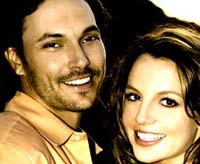
A Modest Marriage Proposal: Ode to Britney & K-Fed

Have you heard? Britney Spears filed for divorce today, citing irreconcilable differences with her husband.

News travels fast. I heard about it in the grocery store. As I waited in line to pay for my items, I overheard this conversation between a mother and her grade-school-age daughter:

MOM: I heard Britney is dumping Kevin Federline. Won't that make you happy if it's true?

DAUGHTER: Yeah--I hope she does dump him!

"Dumping." I'd never before heard that word substituted for "divorce."

Living in Los Angeles, near the heart of the entertainment industry, divorce is about as normal as breakups between teenagers. It's not uncommon around here for a marriage to last a few months, or even a few days.

In honor of Britney and K-Fed's dissolution, and the fact today is election day, I offer these modest suggestions to the U.S. government and all you voters. I'll collectively call them Proposition M:

PROPOSITION M

1) Instead of applying for a marriage license, couples who intend to marry would file an "Intent for Lifelong Partnership" application. For the purposes of taxes, power of attorney, property rights, etc., the U.S. government would not yet recognize the couple as being married. Businesses, however, would recognize partners as dependents. Thus, businesses would offer benefits to their employee's dependent throughout the Intent for Lifelong Partnership application process. One-time filing fee: $10.

2) Each subsequent year, couples would file for an extension on their "Intent for Lifelong Partnership" application. The U.S. government would continue to view them as two individuals who were working toward marital partnership, and would not extend any marital rights or obligations to the couple. Annual filing fee: $25.

3) During the second year of the couple's application process, and before the start of the third year, they additionally would need to undergo the following medical tests: a general physical, full blood chemistry, chest X-ray, screen for AIDS and common STDs, and a psychiatric evaluation. Test results would be made available to their partners, as well as filed with the federal government. Why? So couples would begin to learn disclosure and trust. And because the U.S. government says so. Fee to file lab results: $50.

4) During the third year of the couple's application process, and before the start of the fourth year, the couple would be required to have a pre-marriage sabbatical--to spend a total of three consecutive weeks apart from each other. This allows the couple time to contemplate their resolve for the Lifelong Partnership, and if the partnership is legitimate, will result in a greater appreciation for each other and a longing for one another during the time apart. Affidavits to verify time was spent apart would need to be filed within 30 days of the end of the sabbatical. Filing fee: $100.

5) After the fourth year, but before the start of the fifth year of partnership, the couple must file an "Intent to Stay Together Forever" application, in addition to their Intent for Lifelong Partnership extension. Filing fee: $150.

6) Within 60 days of the fifth anniversary of the original filing of the Intent for Lifelong Partnership application, the couple must submit to a Proof of Authentic Relationship interview, to be conducted by an authorized U.S. government marriage officer. Additionally, the couple must present documents to authenticate their relationship, such as joint financial holdings, life insurance documents showing each other as the beneficiary, photos of their relationship, affidavits from friends and family stating the couple was indeed legitimate, and personal material such as love letters and birthday cards. Interview fee: $250.

7) After completing all application requirements, the couple would file for a Marriage License within 30 days of the sixth anniversary of their original Intent for Lifelong Partnership filing date. The union would then be recognized as a "Marriage" by federal, state, and local government, and be subject to the privileges and obligations of full married status. At this point, the couple could request tax deductions for dependents born or adopted during the Intent for Lifelong Partnership application process. Marriage License fee: $500.

8) Once a Marriage is granted, it would not be dissolvable except in cases of "spousal abuse" (to be defined and decided by the courts). However, couples may file a "Divorce" application at any time for any reason, with the understanding they would be subject to stiff financial penalties. Divorce application fee: 50 percent of the couple's net worth.

Fiscal Effects: There's a reason for the progressive fee increases in my fictional Proposition M: Divorce is expensive. Researcher David Schramm has estimated divorce (and its direct and indirect economic consequences) costs the United States government $33.3 billion per year, or $312 per household. So I figure if folks want to make a vow, they can put their money where their mouth is! Potential financial impact: If celebrities continue to divorce at their current rate, and are assessed the 50 percent net-worth fine, the U.S. national debt would be completely erased in 8 years--sooner if Brangelina ties and unties the knot (just kiddin').

Think Proposition M sounds ridiculous? Except for the last bit about divorce penalties, the above requirements were inspired by real laws: the U.S. government's "Fiance Visa," a process required for a U.S. citizen or permanent resident to marry a foreign national. Except it can take a lot longer to complete the Fiance Visa process and costs a whole lot more. The process includes many applications, many fees, many tests, time spent apart, deadlines, and personal probing. I know it, because my husband and I went through it. (We even sent the government handmade cards we'd made for each other from our first Valentine's Day together. Sadly, they weren't returned.)

My husband and I are still together--we've been married six years. We joke that we've outlasted most Hollywood couples. We did have a lot of time to think about marriage while we were filling out applications and standing in line at immigration offices. But a lengthy, government-saturated application process isn't necessary to restore marriage to its old glory. It's thought--teaching youngsters to use their God-given brains--and good ol' fashion commitment that will breathe new life into marriage.

Our country is at arms over the issue of same-sex marriage; some say this would destroy the institution. But when I hear a mom and her daughter referring to marriage--even Britney Spears' sickly little union--as "dumping," it seems marriage may already be on its deathbed. Britney Spears fans are cheering her decision to leave Kevin Federline. On the evening news, I heard one magazine interviewer praising her decision as a great career move. Many media outlets have said Britney and Kevin's marriage was already over from the start.

Maybe we need to be more concerned about how future generations view marriage as temporary. Maybe we need to cheer on married couples--especially celebrities--who hang in there. Maybe we need to make divorce a less viable option.

Or maybe we really do need a Proposition M.

To ponder:
1) How do you define marriage? What are your views about divorce?

2) Do you think celebrity marriages/divorces influence the general population's views on these subjects?

3) Write your own Proposition M. To do this, consider the ideas you'd like to get across (example: marriage should be a lifelong commitment). Then come up with a set of rules/laws you believe would help spread your ideas about marriage.

4) Aside from creating federal laws about marriage, what are some ways to save the institution? What can you do personally? How can you influence young people?

5) It seems young people don't hear much honest talk about marriage or divorce. If you've been through a divorce, do you often talk to your kids and younger people you have influence over about it? What do you say? If you find yourself at a loss for words, consider these questions: How did you feel through the divorce? What have you learned? If you could change something about your marriage or divorce, what would it be? Looking back at the marriage and divorce, what would you do differently?

Monday, November 06, 2006

Episcopal Church Uses Popular U2 Songs for Worship

"Are we worshiping Bono? Absolutely not. No more so than we worship Martin Luther when we sing A Mighty Fortress Is Our God."
--Paige Blair, an Episcopal priest in Maine, who uses U2 songs for worship music.

This story has run worldwide, and interestingly, several renditions of the piece make it seem as if using secular music in worship is a brand new phenomenon. It isn't new, but I don't think it's widespread, either. I bet the media coverage will result in more churches using mainstream music in their services.

Side note: In 2003, Sparrow Records, a Christian label, released In the Name of Love. The album contains 13 covers of U2 songs by various top Christian contemporary artists including Jars of Clay, Delirious?, Sixpence None the Richer, Tobymac, and Chris Tomlin. The album was created as a fundraiser for World Vision, specifically to fund its AIDS programs in Africa.

MORE:
Episcopal 'U2-charist' Uses Songs in Service

Worshiping God to Secular Tunes: How Hoobastank Takes Me to the Throne

Friday, November 03, 2006

A Halloween-Loving Christian? That's So Halloweird

My Favorite Hallowday

An essay by Holly, age 32

I love Halloween. I am a Christian, and Halloween has long been my absolute favorite holiday.

I know, my favorite should be Christmas or Easter, when we celebrate the birth of Jesus and the reason for our salvation. Or even Thanksgiving, when we're thankful for the gifts God's given us. At the very least, I could pick some patriotic holiday, like the 4th of July, or Cinco de Mayo, or St. Patrick's Day.

Yet I choose Halloween. The "Devil's holiday."

My love for Halloween began long before the major marketing of all things ghoulish that we see today. I can't remember a single year of my life when I haven't worn a costume. As a toddler, I was a pink bunny in footed pajamas. My mom sewed fabric ears and inserted a wire hanger inside to make them stand up. She drew whiskers on my face with her eyeliner. My brother, Mike, was a hobo--another Mom-made costume. No store-bought garb for us! Mom painstakingly stuck individual coffee grounds to my brother's face with honey to create a stubbly beard on his hairless, 8-year-old chin. I still get a kick when I look at the picture of us, me proudly showing off my bunny suit, Mike scowling about the strong smell of coffee.

Dad gave us clean pillowcases to hold our loot. Each year, at least one parent took us door to door collecting treats--sometimes one parent stayed home to give out candy. Every house on our block had their porch light on, and all adults in the neighborhood were prepared with pounds and pounds of candy to satiate the sugar appetites of the costumed kids. Since my parents knew everyone in the neighborhood, they let us eat the candy (and homemade popcorn balls, cookies and cupcakes) without even glancing at it. We pranced around on a sugar high, laughed like hyenas, and stayed out way past our bedtime--even past Mom and Dad's. It felt like we walked for 100 miles collecting candy. (It was two street blocks!) When our sacks became too heavy for our little arms to lift, Dad slung them over his shoulder. Exhausted yet exuberant, we trudged home together.

My parents let us stay up a little later so we could sort and count our candy. My brother and I would then trade some treats so we'd both get the most of our favorites. He was the better negotiator; he could convince me his one Snickers bar was worth three of my Pixie Stix. Then we'd let Mom and Dad have the first pick of our candy. Dad didn't like candy, so it was a safe bet to offer him the best of our best. Mom, on the other hand, loved dipping into our loot. I always winced when she reached out her hand, afraid she'd want my one and only Chick-O-Stick. But Mom never took the good stuff. She'd always go for the ones I didn't want, like the Raisinettes and Junior Mints and black licorice. Yuck! Back then, I thought it was because my mom only liked gross candy. Now, I know she picked the gross candy because she loved me.

Crazy folks ruined Halloween for us--and for future generations of children--when they poisoned candy and stuck razor blades into fruit. But all was not lost. My childhood church jumped in to save the day by creating a Harvest Festival: a fall carnival which just "happened" to coincide with Halloween. Here, kids could still wear costumes. We could collect and eat candy. We still got all the benefits of hanging out with our parents, even that then-unknown influence of seeing adults serve and care for us. That annual church event took the sting out of not being able to trick-or-treat on the streets, and it gave us kids something to look forward to at church.

This year, I wore a costume, as usual. But instead of being the eager kid reaching for candy and popping chocolate bars into my mouth, I was the adult passing out treats at my church's Harvest Festival. I smiled, watching kids and adults play together. Destiny, a teen, plunged her head into a basin filled with water and apples. Trevor, an adult who was running the clothespin drop booth, gave everyone a little side show by clamping clothespins all over his face. And little girls and boys lined up to get their faces painted by ... me!

I didn't get to play the games at this Harvest Festival. I was too busy to eat a piece of pumpkin pie or even grab a chocolate bar. But I did get to appreciate the feeling of community. Now I understand, as an adult, that Halloween--at its best--can remind us it takes a village to raise a child. That might sound cheesy, but I believe most childless adults rarely experience this feeling. Though I don't have any children yet, serving at the Harvest Festival made me understand how important it is for every adult to serve and care for every child. I looked at all the adult volunteers serving the children, and all the children playing with the adults. I saw adults playing the carnival games, having some much needed fun. I saw kids who felt loved and appreciated. No other holiday feels this child-adult interactive to me, or this mutually beneficial to grown folk and kids. (When else do both 4-year-olds and 40-year-olds put on goofy outfits, play silly games, and eat handfuls of candy together?) Even the adults who weren't volunteering were offering a mighty example to the children just by playing the games: They proved that fun and joy can be lifelong experiences. And I knew this joy, from our little church Harvest Festival, was exactly what God intended for us to experience.

I am a Christian, and I love Halloween. I've read many an editorial instructing Christians to shun this "night of evil." I well know the history of the date, I've heard the reasons some Christians avoid any Halloween-related event. I know how the church-at-large has oft tried to redeem Halloween from its pagan origins, but unlike Christmas and Easter, it hasn't succeeded in Christianizing it. With all the terrifying costumes in stores and bloody horror flicks released this time of year, am I being too idealistic about Halloween? Maybe. Truth is, if God asked me to stop all observation of Halloween, I would. He hasn't. I think he won't.

Maybe we don't need to Christianize Halloween--to make it a religious holiday--in order to enjoy it. I think of how my mom used to eat the gross candies, knowing I'd probably eat them just because they were there. And that I wouldn't enjoy them a bit--they'd potentially even ruin the candy-eating experience for me (a yummy apple Jolly Rancher followed by black licorice--gross!). In my mind, God has picked all the grossness out of Halloween for me--its dark past, the evil ideas it still contains, the scary images. He's reminded me he makes pumpkins. That he created creativity and imagination. That he loves when I show love to others as a volunteer at my church's fall carnival. That he's God, and he can use even Halloween to love on his kids--of all ages.

And that's why Halloween is still my favorite.

To ponder:
1)
What are some things we attempt to Christianize? When is this a good thing? When is it a bad thing?

2) Do you believe God can give you good things from sources like secular holidays, mainstream music/movies/books, and stuff that's not "Christian"? Think of a blessing you know came from God that was delivered via one of these sources.

3) Check out Luke 10:30-35. Jesus uses a Samaritan (Samaritans weren't part of the Jewish people--in fact, they were pretty indifferent to the Jews) for his illustration. Why do you think Jesus chose to use a Samaritan in particular? Consider the people in your life who aren't Christians. What are some contributions they've made to your happiness and well-being? This week, you might even let them know you're thankful they're in your life.

4) Consider something that isn't "Christian" that you really like: maybe it's Top 40 music, action movies, or even Halloween. What are some of the "yucky candies" that come along with this treat you enjoy? Pray for discernment: Ask God whether he can remove the bad candy, give you an alternative, or whether he's leading you away from this thing. Be honest in telling God the aspects you love, and the ones that are spoiling it for you.

Monday, October 23, 2006

Where on Earth are All the Missionaries?

My friend Kevin recently offered some interesting thoughts about a comment I made in my WBCL radio interview. I'd said, "[Christians] who work in Hollywood are missionaries. We would never say to a missionary in Africa, 'Why on earth are you working in that godforsaken place?' So we shouldn't do it to our Hollywood missionaries, either."

Kevin, who worked in the entertainment industry for some 20 years, thought my statement might be going a bit too far:

"I think the church makes a mistake to be overly impressed by Hollywood or its practitioners, and sometimes we act too desperate to recognize any little Christian involvement in secular entertainment. ... I always felt that Christians in Hollywood were lionized too much by certain evangelicals. The problem is, few have motives as pure as missionaries, and those who do generally lack the sensibility to be successful in a business that rewards compromise, sensuality and a worship of materialism."

As soon as I read Kevin's words, I knew I'd spoken too broadly, implying all Christians who work in Hollywood are missionaries. That's like saying every person in the world who identifies themselves as a Christian is doing God's good work. We know that's not true--otherwise, the work would be done by now, right? Even when we strive to do that work, we all fail to show Jesus' love at times.

For me, my comment was really more about my own judgmental attitude toward Hollywood folk. To be painfully honest (painful to me, because it makes me see how judgmental I can be), my thoughts were along these lines: Why are those Christians using their God-given talents to work in Hollywood? They should leave Hollywood and start theater and film ministries in their churches. They should be acting in and directing church productions. They should be making videos for their Sunday services and youth groups. They should be writing Christian screenplays about Christian life so we'd get more than just a cheesy Left Behind movie once every few years. (No offense to you lovers of the Left Behind flicks, but you gotta admit, wouldn't it be cooler if Left Behind looked more like, say, Spiderman, or had an M. Night Shyamalan-esque script?)

Honestly, those judgmental thoughts resulted from me transferring my own career calling--to full-time Christian ministry--on to every person in Hollywood. My thoughts were a reflection of my own experience. I'd worked for mainstream newspapers and secular publications for many years before I became a Christian. Then when God gave me the opportunity to work for a Christian magazine, I jumped at it--and absolutely loved it. I was a relatively new Christian and I (secretly) began believing everyone should quit their jobs and work for the church. It wasn't because I thought you had to be a church employee to be a "good" Christian. Rather, I was so excited about spreading the Good News in this way, I wanted every Christian to have that joyous experience. Thing was, I thought the only way for people to experience this feeling was to be in full-time ministry, and to be immersed in Christian stuff all the time.

A friend, I'll call her Cami, set me straight. Cami pointed out it's easy for Christians to get caught up in Christian subculture: our little world of Christian books and magazines, Christian music, Christian movies, Christian friendships and communities. It's a comfortable and safe place to be. When I was a new Christian, it was heaven on earth, and I wanted to stay in that space forever.

Unfortunately, we don't encounter many folks who aren't Christians when we're living the Christian-subculture life. Here's my weird little analogy: Imagine you're living in a house that's under construction. You're building it and living in it at the same time. You decide to take a break from building to furnish one room so it will be a comfortable haven where you can rest. You choose, say, the living room, and you furnish it with silk curtains and velvet armchairs. Once it's done, you kick back in your chair, prop your feet up, and enjoy the peaceful rest the room provides. Nothing wrong with that! Problem is, this room is so comfy, you don't want to get up from your chair. From your chair, you can see the work that remains to be done: missing windows, holes in the roof, whole rooms that need to be built. We're tempted to become couch potatoes in our Christian subculture living-room. It's a lot easier than picking up a hammer and expending the energy and sweat it takes to begin building again.

A few years ago, I became acquainted with Hollywood Prayer Network and Act One, two organizations that support Christians who work in Hollywood. Admittedly, those old judgmental thoughts were the first to enter my head when I met people from these organizations. Then I talked with them and listened to how God was using them. There are Christians who have fought to keep some seriously horrible things off TV. As bad as TV can be, I know it would be worse if those Christians weren't working in Hollywood. Another judgmental thought that entered my head: Why aren't they getting all the junk off TV? Why aren't they getting cleaner programs on? I thought back to what my friend Cami had told me, and I realized Christians in Hollywood can't turn ABC into the Trinity Broadcasting Network--the unbelieving world, for the most part, just aint gonna watch TBN. And I realized: Smart folks don't fight every single battle tooth and nail. We fight the ones we know we can win, and we'll also fight to the death during those battles that are the most important to us.

I was working on a story about Clay Aiken sometime ago, and was struck by something he did. He asked to put a worship song into his concert set, and he was amazed when his sponsor agreed. He said he'd deliberately chosen to become a mainstream artist rather than a Christian artist because he knew he'd get big opportunities to share his faith in small ways. Now, if Clay had performed solely Christian contemporary songs, surely some people who weren't believers would have gone to his concerts. But I'm guessing his choice gives him better access to the unbelieving world. Cynical me might think, Well, Clay's just in it for the money. In my spirit, I know this: He doesn't have to sing any songs about God or Jesus. The fact he's made that choice and takes that risk suggests he's one of those missionaries in Hollywood. There may not be a zillion of them, but I do believe there are Christian missionaries in the entertainment industry.

I don't think I've experienced Hollywood folk being lionized by the church. That's probably because I grew up in the 'burbs, and I'd never even met an industry person until we moved out to the L.A. area a couple years ago. (Or it may be that I'm just totally clueless. Back at my Christian magazine in Chicago, Jon Foreman of the band Switchfoot was being interviewed one day. A co-worker asked me who was being interviewed, and I replied, "Oh, some guy from Switchblade or Switch-Off or something like that.")

But I can totally see Kevin's point. It seems those who are perceived as having money or power can get special treatment from the church. And that's probably an extension of our human tendency to latch on to things perceived as measures of success (wealth, fame, power).

That's also probably why missionaries in third-world countries tend to have pure motives--no money or fame there. I think we'd all agree missionaries are some radically awesome people. How many of us has secretly thought, Maybe I should be a missionary or a pastor. Maybe that's what Christians are supposed to do. Maybe God loves them a little bit more?

I believe every Christian has a ministry, regardless of their career path. I believe every Christian can be a missionary, taking God's Word to the most unfriendly and unreceptive territories. Whether that's the jungles of Africa, the rough-and-tumble Hollywood scene, or the watercooler where our atheist co-worker hangs out, we are all called to a mission field. We're all called to continue the work of Jesus, the Master Carpenter, to keep building the kingdom of God.

To ponder:
1)
We often tend to judge people--individuals and groups--because we've made assumptions about them. Who have you misjudged? What misconceptions did you have about them? How were those misconceptions changed?

2) Consider this definition of the word "missionary": Someone who wants to share with others how Jesus can transform lives. Do you see yourself as a missionary?

3) If you answered "yes" to #2: Think about your mission field. Where is it? What are some of its unique challenges? How has God helped you with these challenges?

4) If you answered "no" to #2: What obstacles might be preventing you from being a missionary in the sense of the definition above? (Some examples: fear, not knowing any people who aren't Christians, not knowing how to share your faith.)

5) What is your ministry? Try to think beyond the talents we typically associate with ministry (speaking, singing, acting). If you think you might not have a ministry, consider what you're particularly good at. Do you like to hug people? Do you tend to notice homeless people when you're walking down the street? Do you enjoy painting walls or hanging pictures? Are you a really good listener? Consider Matthew 10:42: "This is a large work I've called you into, but don't be overwhelmed by it. It's best to start small. Give a cool cup of water to someone who is thirsty, for instance. The smallest act of giving or receiving makes you a true apprentice" (The Message).

6) Do you have friends who aren't Christians? If it seems you spend all your time with other Christians, consider building relationships with people who aren't Christians. Talk to people you wouldn't normally socialize with at work, at your college or your child's school, even in the grocery store. Get to know your neighbors. If you often go to the same Starbucks, say hello to the cashier. Your smile or kind word may be the cool cup of water that person is thirsting for.

Monday, October 16, 2006

More Than One Christian View on TV Viewing

This is a rough transcript of Holly's interview with WBCL radio about her article, "Unearthing Unearthly TV: Should Christians Watch Supernatural-Themed Television Programs?", which appeared in the Sept/Oct 2006 issue of Today's Christian Woman.

This transcript has been edited for clarity. All questions were asked by WBCL's Lynne Ford unless otherwise noted.

Holly, you are either brave or crazy to write an article subtitled "Should Christians Watch Supernatural-Themed Television Programs." Which one is it?

HOLLY: I don't think I'm particularly brave, so it must have been a moment of insanity when I agreed to write the piece.


Tell me why you wanted to write this article.

HOLLY: I love thought-provoking topics: They make some people think deeply, and they just provoke other people. In either case, people are motivated to pop their heads out of their comfortable, complacent shells. And you really can't read the words, "Should Christians Watch Supernatural-Themed Television Shows?" and not feel some sort of reaction.

But you know, it would be absolutely crazy for me to say, "I know definitively what Christians can and can't do." So I would never say that. This article really isn't an answer to that question, but rather, it's a call to individuals to think about the question for themselves.

Why the interest in supernatural-themed shows?

HOLLY: I think humans in general have an inherent curiosity. We want answers. "What happens when we die?"--that's the ultimate question. Supernatural-themed TV shows are about what happens after death, or about creatures like ghosts and vampires that possess the ability to live forever. We're curious about these topics.

Now, for those who are not Christians, there's no reassurance from the Bible about death. Scientists aren't offering any proof or explanations about it, so where can non-believers look for information? They could go to their local Borders bookstore and search the philosophy section for help, but TV is much easier. It's a no-brainer. For someone who isn't a Christian, TV's guesses about death are just as valid as anyone else's.

But Christians, on the other hand, we have the Bible and our faith. So why would any Christian want to watch a supernatural-themed TV show?

Let's talk about that. You write that Christians tend to hold one of two opposing opinions about these kinds of shows. What are the two views, and how are they similar?

HOLLY: Let me offer the two extremes. At one end, a Christian might say, "Nothing on TV meets God's high standards. So I'm just gonna throw my TV out the window." At the other extreme, a Christian might say, "My God is bigger than anything on TV. And he doesn't want me to be afraid of TV. So I can watch anything."

There are problems with both of these views. In the first case, a person might say, "Well, I'm just not going to watch any TV, and I'm going to shut out all of pop culture entirely. That might feel safe, but what happens is we cut ourselves off from the unbelieving world. If every Christian decided to do this, then who's left tell the unsaved about Jesus?

In the second case, a Christian might overestimate the strength of their faith. I think it confuses the strength of our God with our own personal strength and willpower.

In the article, you quote two individuals who have different perspectives. One is Susan Wales, who's a writer and producer--her husband is the one behind the Christy series--and Sheryl Anderson, a woman who wrote for Charmed. Susan's personal choice would be to distance herself from something that has a belief system that's different from hers. Sheryl, on the other hand, says her decision is to watch shows because she's not afraid of those things. After interviewing these very intelligent, very committed believers, where have you come out personally?

HOLLY: There are a lot of people within that spectrum. When I first approached this subject, I figured there had to be a simple yes-or-no answer to this question. The two views you just talked about, I thought they were polar opposites. Problem was, I couldn't come up with an answer to the question--I couldn't figure out whether we should chuck our TVs or embrace them.

Then my pastor challenged me with this question, "What if those two seemingly opposite opinions are actually two ways of expressing the same goal?" That hit me like a TV set being dropped on my head. You see, both opinions consider the power of TV messages. The first says, "There's dangerous stuff in that show. If we don't watch it, then it can't have any power over us." The second says, "There's no real power to this show, so there's no reason for us to avoid it." Both views have the same objective: They want to displace the power of TV messages.

How does a believer determine, "What is the choice for me?"

HOLLY: First, we need to educate ourselves about the real paranormal world. We can do that by reading Scripture on demons, reading about the occult in Christian books and on Christian websites, and asking our pastor questions about the topic.

Second, when we watch TV, we need to actively watch it with an alert mind. Most of us come home at the end of the work day and plop down in front of the TV. And we're tired, so we zone out and we absorb everything the TV launches at us. We're not really thinking about it.

So how do you know if you're actively watching? First, think about TV shows you recently watched. Ask yourself these questions: What was it about? What were some of the best lines from the show? If you can't remember much about the episode, you might be watching too passively.

Most importantly, if you're feeling something in your spirit, if you're feeling uncomfortable watching a show, don't dismiss that feeling. We really need to pray about those feelings because The Holy Spirit might be letting us know the program isn't for us.

Talk about the theology behind these shows.

HOLLY: Most of these shows portray good as winning out over evil. "Good," however, is rarely represented as God, much less Jesus. The good girls and good guys use their brains and their muscles to defeat the forces of darkness.
For women in particular, shows like NBC's Medium can make us feel special. Here's a story about a regular woman who uses her psychic abilities to solve horrific crimes. The show even portrays those psychic powers a lot like women's intuition.

The idea that an average mom and wife could essentially be a superhero--that's attractive to all women. Because we all want our talents recognized. We all want to do good and help others.

Do we need to be concerned about the impact of these shows on teenagers?

HOLLY: The truth is, paranormal shows these days come in kid-friendly packages. They're on the Disney channel, they're animated.


What parents can do is to be aware and offer their children some guidance. That's true for any television show your child watches. Watch a few episodes with your child. Afterward, discuss how the show differs from reality. Kids might not even notice the supernatural elements in the show. By pointing them out and modeling active watching, kids will learn how to become more discerning viewers.

And even asking kids, "Why do you want to watch this? What is appealing to you?" I know for Char, this is a topic of great interest.

(CHAR BINKLEY) I was interested to note that in her article, she mentions witchcraft is on the rise among high-school girls. One wonders, with all these shows that have been on TV in the last couple years, if there will continue to be an increase.


"Christians who work in Hollywood

are missionaries. We would never say

to a missionary in Africa, 'Why on

earth are you working in that

godforsaken place?'"

(LYNNE) Holly, what did you take away personally?

HOLLY: A lot of it was the understanding Christians are coming from the same perspective. As extreme as our views might sound, we're coming from that same perspective of faith.

It also made me think about how I watch shows, and whether I'm really tuned in. One practice I do personally is to keep track of the number of swear words that are in a show. It really makes me tune in to what's going on.

In Jane Struck's editor's note in the Sept/Oct issue of Today's Christian Woman, she commented that she wonders about her own TV viewing, from the grumpy arguments on Everybody Loves Raymond, to the violence on 24. I thought about how we separate out what's bad, worse, and worser still.

Images have such great power. I've watched movies, then wished later I hadn't. I think saying "no" to ourselves sometimes can be a good thing.

HOLLY: This article is about supernatural-themed TV shows specifically, but I think the takeaway can be for any television show, or any type of film, or even anything we're listening to.

Holly, thank you for this article. I appreciated the scope of people interviewed. You could have focused on the extreme position of "never-ever-ever, this is always wrong," as opposed to saying, "Let's think about this."


And you spoke with believers who are gifted in writing, directing, and producing. They're influencing not only those who watch their creations on screen, but also those they work with in Hollywood. That is as much a part of their ministry as the product they produce.

HOLLY: It was important for me to recognize people who work in Hollywood are missionaries. We would never say to a missionary in Africa, "Why on earth are you working in that godforsaken place?" So we shouldn't do it to our Hollywood missionaries, either. I'd previously looked at some Christians in Hollywood and thought, "How can they work on that show?"

(CHAR) Part of the takeaway was for me to think about how much vegetative viewing I do. I don't always think about how many murders or sex scenes or crude jokes I'm watching. The article challenged me about my lazy viewing.

(LYNNE) When Dan Allender was here last year, he made a comment about the popularity of reality television. He said we're so lazy about our own lives that we live vicariously through others. We waste so much of our time entering into what someone else is doing. We should be using this time to step away and make our own stories because they're just as interesting.

Holly, thank you for joining us for today's Mid-Morning show, and thank you for this wonderful article.

HOLLY: Thank you so much for having me.

Saturday, October 14, 2006

Holly on WBCL Radio

My interview with WBCL radio is now available online. It was done via phone at 6 a.m.--the first time this year I woke up at the crack of dawn, and hopefully the very, very last. Early riser I am not.

Aired: October 4, 2006

Topic: Should Christians watch supernatural-themed television programs? (Based on my article that ran in Today's Christian Woman, "Unearthing Unearthly TV")

INTERVIEW (Holly's segment runs from the 23 to 38 minute marks.)

MORE ABOUT THE SHOW

Monday, October 09, 2006

Biola Professor Survives Big Rig Accident

"After it happened, I really started thinking, 'Lord, are you ready for me to go? I guess you weren't.' Maybe this is a little tap on the shoulder, so to speak."

--Biola University professor Dave Bourgeois. A big rig rolled onto his '68 Mustang Monday morning. The NBC news report said Bourgeois had been driving home after a morning Bible study. According to the report, emergency workers weren't even expecting Bourgeois would be alive, much less essentially unharmed. I'm hoping he'll blog about it.

More:
Vintage Mustang Crushed When Big Rig Overturns

Dave Bourgeois's Blog

Saturday, October 07, 2006

Word Up, Yo

Words can stay with us forever.

Last week, I blogged about Wendy, a friend who'd quit modeling because she didn't want young girls to believe her tall, trim figure was the standard for beauty. Wendy sent me some words that made me smile:

Great article, Hol. I'm so glad my words meant something to you. I always wondered if I had made an impact by making that decision. Now I know I have. Imagine all the young girls right now who don't know how lovely they are. Keep making your mark!

This got me thinking about how meaningful words can be. My writer pal Teeriffic loves quotes. She'll chew on one tiny sentence for hours, savoring it like a gourmet meal. Thoughtful words feed her soul.

Over the years, I've collected some words in my mind. Some are good words: They've built me up and helped me grow. Some, like Wendy's words, have inspired me deeply. I carry her words with me every time I'm around young people, hoping I can inspire them to see the beauty within themselves.

Someone did that for me when I was a teenager. It was a high-school teacher--I'll call him Mr. T--and I'll bet he never knew how much it impacted me when he said:

"No one fully appreciates the beauty of their youth."

He'd shown some of us students a picture of himself in his glory days. In that photo, he looked like an Olympian: young, strong, vibrant. It was a sharp contrast to the way we students saw him: an often tired-eyed teacher who'd obviously spent too many hours around whiny teenagers and was a bit worse for the wear.

After seeing that photo and hearing those words, my teenage mind decided I'd see myself as beautiful right then and there, instead of waiting until I was in my 30s to nostalgically reflect on my own glory days. "Lookit that pretty girl!" I'd proclaim to myself on passing every mirror.

As I entered my early-20s, I still thought about Mr. T's words from time to time. I wondered if I'd really understood their meaning. Maybe he wasn't referring to physical appearance. Maybe Mr. T meant for us to embrace life while we were still young and able-bodied enough to enjoy it, before time and circumstances drained us of youthful energy. So I climbed mountains and jumped in lakes. I drank in the wind and the sunshine, and devoured the world around me with my eyes and ears and hands and feet. Then came my mid-20s. Perhaps Mr. T had been talking about inner youth, I thought, the innocence and trust and wonder that seems to disappear with knowledge and experience. At the time, I was on a spiritual journey which took me through every religion and "ism" imaginable. I thought if I could just make myself good enough for God, I'd get back to that innocence and wonder I longed for.

Now I'm into my 30s. Earlier this week, I read these words in my Bible: "You take care of the earth and send rain to help the soil grow all kinds of crops. Your rivers never run dry, and you prepare the earth to produce much grain. ... Wherever your footsteps touch the earth, a rich harvest is gathered. Desert pastures blossom, and mountains celebrate. Meadows are filled with sheep and goats; valleys overflow with grain and echo with joyful songs." (Psalm 65: 9, 11-13, CEV).

Suddenly, Mr. T's words popped into my head again. His words took on a new meaning in light of this Scripture. I realized: My youth is every day I am alive, until the day I die. The beauty of youth--of life, really--is God's presence. We think we contribute so much to our own existence by working, making money, paying bills, eating, exercising, building families and societies. That's nothing compared to making the sun rise (what human can do that?), sending rain and providing all the right conditions so food can grow. What if God didn't provide sun and rain and fertile soil? Think about that the next time you're talking about putting food on the table--is it really your efforts, or is it God's doing? I buy a cotton t-shirt from Old Navy for $5 and feel impressed with myself for putting clothes on my back. But did I create a plant that could be used to make clothing? If I eat chicken tonight, do I worry chickens might not reproduce ever again, and the meat source would be gone?

God takes care of so many things in our lives. He's got a handle on it, down to the last detail. Yet, how often do I say, "Thank you, God, for providing enough water on the planet so I can have something to drink today. (Wow, there's even enough for me to wash my face and launder my Old Navy t-shirt!) Thank you, God, for making cows, because I sure do love milkshakes and hamburgers. Thank you, God, for the breeze when I sit on the patio. The weatherman's talking about how westerly winds are going to affect temperatures, and the scientists are talking about how to harness energy from the wind. Me, I just like how it feels on my face. Thanks for giving me that feeling, God." Truthfully, I don't think to thank God for these daily blessings all that often.

I'm still not entirely sure what Mr. T meant. But I'm glad his words made me realize what a beautiful life God has given me. And it's too true I'll never fully appreciate the beauty of my life. Tomorrow, I might be more concerned about what we're having for dinner than where the food originated. Tomorrow, I might not notice the gentle autumn breeze. Tomorrow, I might be sitting in traffic, fully grouchy and completely inappreciative.

So, while it's on my mind: Thank you, God. It's a beautiful life.

To ponder:
1)
What are some good words that have stayed with you for years? Why are those particular words important to you?

2) Bad words can stay with us, too. Are there words that have caused you hurt over the years? Tell God how those words make you feel. Then, ask him to give you new words--good words--to replace the bad ones.

3) I've often asked God to give me good words--helpful statements that would encourage others. And sometimes, I believe God has completely shut my mouth. That's because I needed to listen rather than speak. Is there someone you don't seem to have the right words for? Consider admitting to them you don't have the answers they need. Then point them to The One who does.

4) Need some good words right now? Check out these ones (Isaiah 40:28-31).